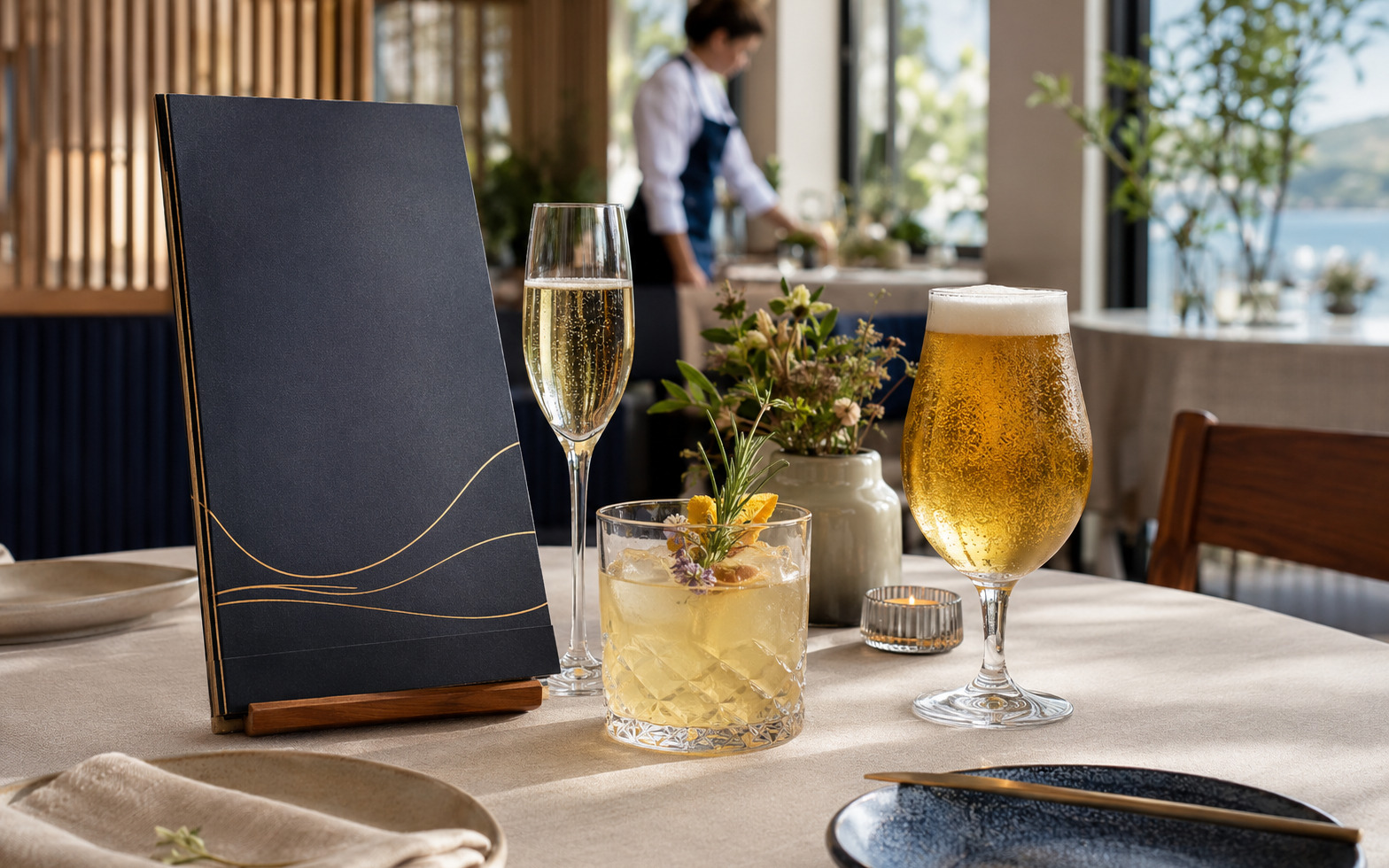
The forgotten option versus the considered menu
Picture the forgotten option: one alcohol-free beer, hidden at the bottom of the menu and served without a glass. Nobody mentions it, so very few guests order it.
Now picture a considered offer: a chilled aperitif, sparkling wine by the glass, a quality beer, a proper zero-proof cocktail and a suggested food pairing. The range is easy to find, the descriptions sound delicious and the team can recommend each drink with confidence.
The difference is not a huge menu. It is thought, visibility and care.
1. Give alcohol-free drinks a proper place
If customers have to search for the alcohol-free choices, many will give up and order water. Place them where people naturally look: within the beer, wine and cocktail sections, or together in a clearly named alcohol-free collection.
Avoid treating the category as an apology or an afterthought. Good menu placement tells guests these drinks belong at the table.
2. Build a small range with real choice
You do not need twenty options. You need enough variety to cover different tastes, occasions and food choices.
A strong starting range might include:
- one crisp, refreshing beer
- one quality still wine
- one sparkling option by the glass
- one distinctive zero-proof cocktail or aperitif
- one cider or ready-to-drink choice
3. Describe the flavour - not what is missing
‘Non-alcoholic wine’ tells the customer what has been removed. ‘Crisp Marlborough-style Sauvignon Blanc with citrus, passionfruit and a clean finish’ gives them a reason to order it.
Use the same inviting language you would use elsewhere on the drinks list. Talk about aroma, flavour, texture, origin, finish and food pairing. The product should sound enjoyable in its own right, not like the consolation version of another drink.
4. Serve it with the same care
The presentation begins before the first sip. Chilled glassware, the right pour, a fresh garnish and a confident placement at the table all affect how the drink is perceived.
A premium alcohol-free beer deserves a clean, cold glass. Sparkling belongs in a flute or wine glass. A botanical serve should arrive with the same polish as any cocktail leaving the bar.
Guests notice when care has been taken - and they also notice when it has not.
5. Give your team something useful to say
Staff do not need a lengthy training session. They do need to know what each drink tastes like, who it may appeal to and what dish it works with.
‘Would you like to try our alcohol-free sparkling? It is crisp and dry, and works beautifully with the seafood’ is far more effective than ‘We have a zero option somewhere on the menu.’
One confident recommendation can turn an unnoticed listing into a sale.
6. Let food do some of the selling
Food pairings make alcohol-free drinks easier to imagine and easier to choose. Add a simple pairing note on the menu, include a zero-proof option in a set menu, or ask staff to suggest one alongside a dish.
- crisp alcohol-free Sauvignon Blanc with seafood or fresh salads
- sparkling with oysters, fried food or salty snacks
- cider with pork, cheese or spicy dishes
- botanical spirits with citrus-led or herbaceous plates
- full-flavoured beer with burgers, barbecue or shared plates
7. Price for quality - and make the value visible
Alcohol-free does not mean effort-free. Quality products, skilled production, glassware, garnish, staff time and service all have value.
Price confidently, while making sure the experience supports the price. When a drink looks good, tastes good and is presented well, customers are far more likely to see it as a premium choice rather than an expensive soft drink.
8. Watch what sells and refine the range
Start with a focused selection, track what customers order and listen to what your team hears at the table. If one style performs strongly, build around it. If another sits untouched, review its placement, description, price and staff confidence before deciding the product itself is the problem.
A good alcohol-free menu is not set and forgotten. It becomes stronger as you learn what works for your particular guests.
The Quantum Zero takeaway
The best alcohol-free menus do not make a grand announcement about compromise. They simply offer appealing drinks, presented with confidence, for people who want something different in their glass.
Customers do not want to feel as though they have been given the consolation option. They want a drink chosen with them in mind.
That is where Quantum Zero can help: selecting the right range, shaping the menu, supporting your pricing and giving your team the knowledge to sell it well.
Offer genuine choice. Present it beautifully. Make it easy to order.
← Back to all Tasting Notes